

Gradient blur
Persoon werkt op een laptop voor een serverruimte
Blog
Artificial Intelligence
Back to overview

Quantum is closer than you think

To many people, quantum computing still sounds like something for the distant future. Yet companies are already using the technology behind it today to solve concrete problems, often together with AI.
26 - 10 - 2026

Wim Lauwers, Talent Acquisition Partner at Xylos, went to hear Fujitsu speak about quantum and AI on 13 October. He shares what he took away from it.

Quantum computing. Honestly? Until recently, it mostly sounded like something for scientists and mathematicians to me. Interesting, absolutely. But also complex, abstract and above all something for the future.

I recently had the chance to attend a session by ADM on quantum, AI and digital sovereignty. The speaker was John Walsh, CTO of Fujitsu Europe. After that evening, I see it differently.

What stuck with me most? Quantum is closer than we think. We won't all be sitting behind a quantum computer tomorrow. But the technology behind it is already being used today to solve very concrete problems, in logistics and manufacturing, but also in drug development and finance.

And fortunately, you don't need to understand quantum physics first.
Smarter beats bigger

There was also an interesting message about AI that stayed with me.

By now, we have grown used to the race towards bigger and more powerful AI models. But bigger does not automatically mean better.

During the session, a Daikin case was presented. There, an AI solution was built that supports 5,000 service technicians with knowledge from around 280,000 technical documents. By combining techniques such as vectorisation and knowledge graphs with a specialised language model, the solution achieves an accuracy of 98.9% in 18 languages, according to the speaker.

My main takeaway: what you build around the model counts at least as much as the model itself. Which data do you use? How do you structure that information? What context do you provide?

That may sound less spectacular than "we use the biggest AI model", but in the end, it's the result that counts.

Okay, but what can you do with quantum today?

To be honest, that was the question I asked myself too.

The examples from the session gave a good answer.

In the port of Hamburg, for example, quantum-inspired technology was used to optimise traffic flows and traffic lights. According to the presentation, this resulted in 22% less traffic and 9% lower CO₂ emissions.

Another example came from manufacturing. Say you need to cut parts from a large and very expensive titanium sheet. You want to get as many parts out of it as possible and waste as little material as possible. The catch is that there are an enormous number of possible combinations. It is exactly for this kind of complex optimisation problem that this technology is interesting.

Suddenly, quantum becomes a lot less abstract.

Six months of work in three days

The case that perhaps stuck with me most came from the pharmaceutical world.

When developing medicines, researchers have to select the most promising candidates from huge numbers of possible molecules. By combining AI and quantum-inspired optimisation, that selection can go much faster.

In one example the speaker mentioned, a selection that traditionally takes around six months took only about three days. The clinical development that follows is of course still needed. But the difference in that first selection phase is impressive.

And then you start to understand why there is so much interest in this technology.

The future is a combination

My most important insight of the evening?

Let's stop looking at AI, quantum and classical computing as separate technologies.

The vision of the future sketched during the session is precisely a combination of those different worlds. For some problems, classical computing remains the best choice. For others, AI will make the difference. And for very specific, complex optimisation problems, quantum technology can provide an extra boost.

As users, we will probably hardly notice any of it. Behind the scenes, the technology best suited to solving a particular problem is used.

And perhaps that is what I find most interesting about the whole story.

We don't all need to understand exactly how a quantum computer works. Just as we don't need to know exactly what happens under the hood of an AI model to get value out of it.

The question that matters is much simpler:

Which problems can we solve better, faster or smarter with it?

After the ADM and Fujitsu session, my view has certainly changed. Quantum is still quite complex to me.

But a distant future? Much less so.

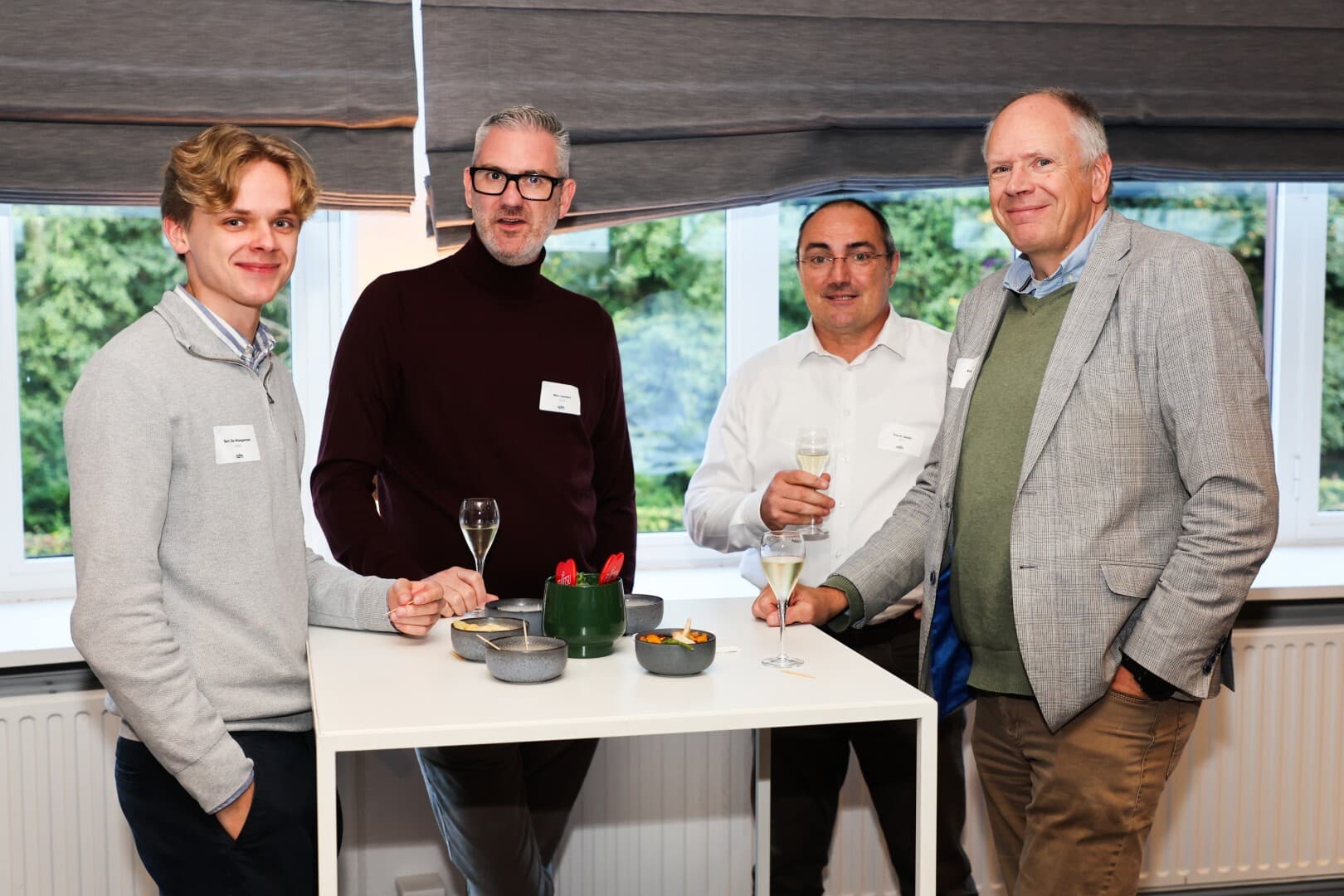
Deelnemers aan de ADM-sessie over quantum en AI

Impression of the ADM session on quantum, AI and digital sovereignty.